roasters-coffee-content
Coffee Content
Roasters Book Page 41
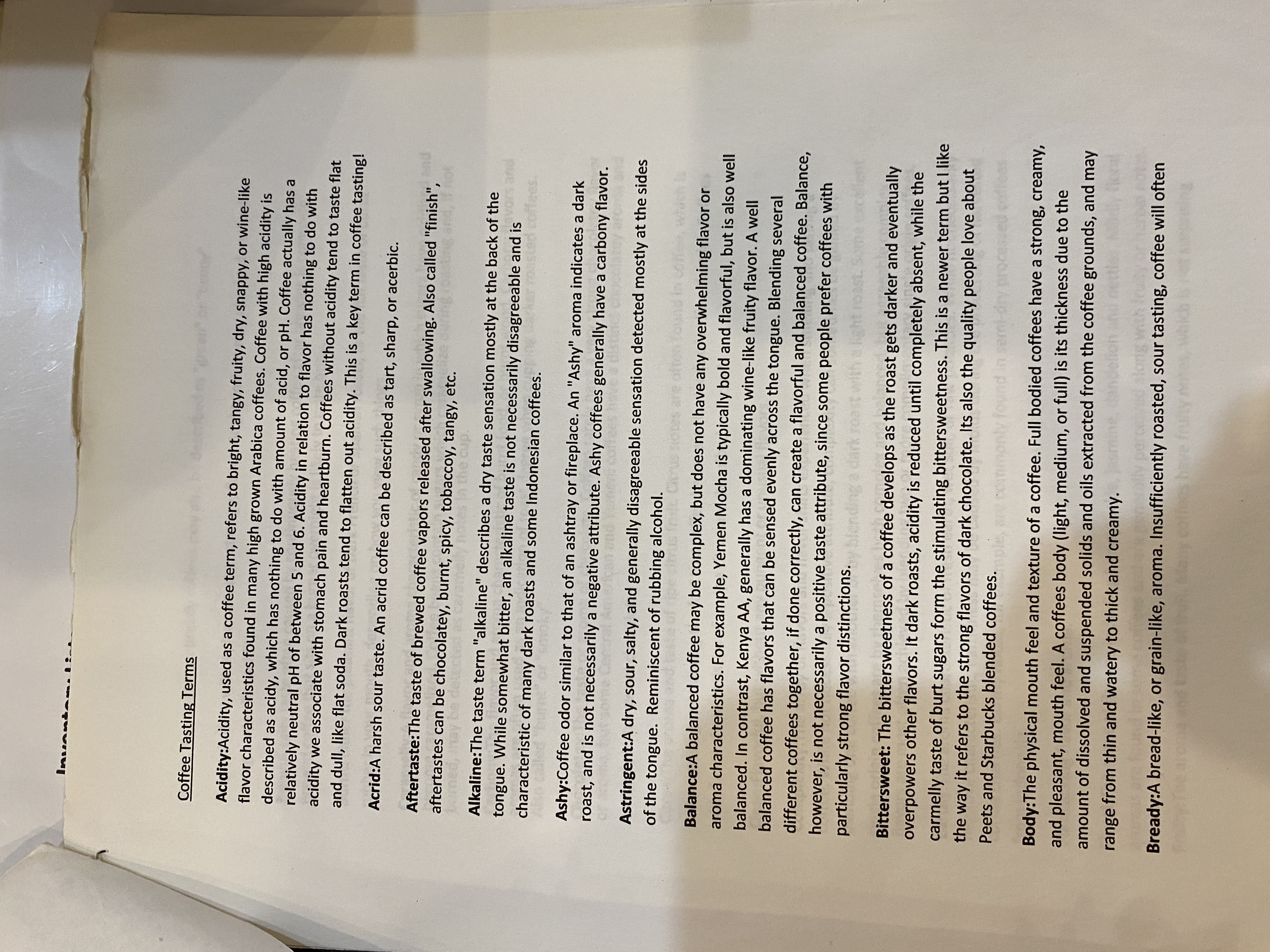
Source Image: ../images/shift-book/roasters-book-41.JPG
Coffee Tasting Terms
Acidity
Acidity, used as a coffee term, refers to bright, tangy, fruity, dry, snappy, or wine-like flavor characteristics found in many high grown Arabica coffees. Coffee with high acidity is described as acidy, which has nothing to do with amount of acid, or pH. Coffee actually has a relatively neutral pH of between 5 and 6. Acidity in relation to flavor has nothing to do with acidity we associate with stomach pain and heartburn. Coffees without acidity tend to taste flat and dull, like flat soda. Dark roasts tend to flatten out acidity. This is a key term in coffee tasting!
Acrid
A harsh sour taste. An acrid coffee can be described as tart, sharp, or acerbic.
Aftertaste
The taste of brewed coffee vapors released after swallowing. Also called “finish”, aftertastes can be chocolatey, burnt, spicy, tobaccoy, tangy, etc.
Alkaline
The taste term “alkaline” describes a dry taste sensation mostly at the back of the tongue. While somewhat bitter, an alkaline taste is not necessarily disagreeable and is characteristic of many dark roasts and some Indonesian coffees.
Ashy
Coffee odor similar to that of an ashtray or fireplace. An “Ashy” aroma indicates a dark roast, and is not necessarily a negative attribute. Ashy coffees generally have a carbony flavor.
Astringent
A dry, sour, salty, and generally disagreeable sensation detected mostly at the sides of the tongue. Reminiscent of rubbing alcohol.
Balance
A balanced coffee may be complex, but does not have any overwhelming flavor or aroma characteristics. For example, Yemen Mocha is typically bold and flavorful, but is also well balanced. In contrast, Kenya AA, generally has a dominating wine-like fruity flavor. A